Industrial Concrete Slab Repair and Sub-Grade Stabilization in Aurora, ON
Challenge
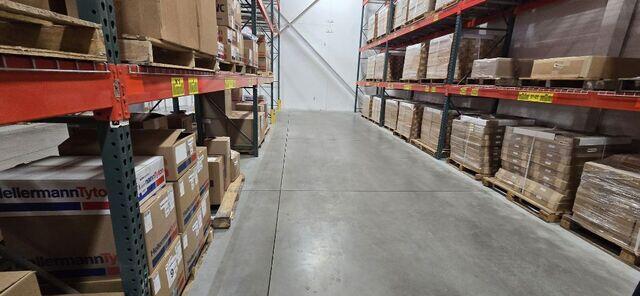
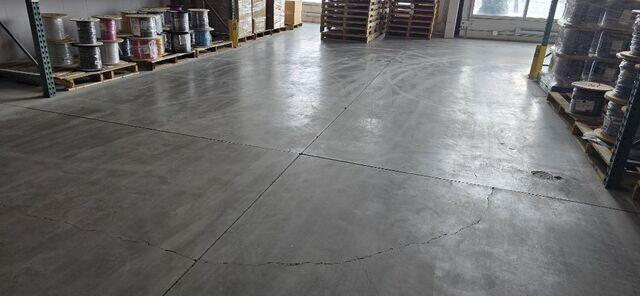
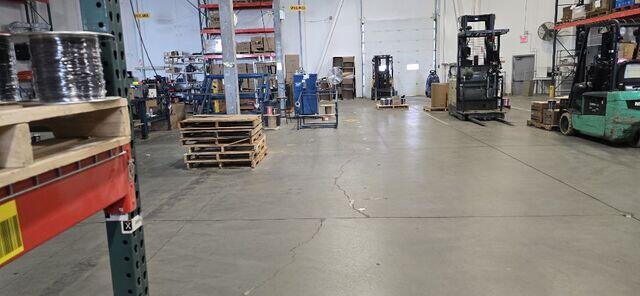
A high-volume industrial facility in Aurora, ON, was experiencing a major operational bottleneck due to sinking concrete slabs in its primary loading and staging area. Years of heavy machinery use and constant forklift traffic had caused sections of the warehouse floor to settle unevenly, creating uneven joints, deep voids, and structural instability beneath the concrete surface.
These conditions led to “dock shock,” where forklifts and other heavy equipment would impact the uneven ridges, increasing the risk of damage to sensitive inventory and accelerating wear on tires and suspension systems. In addition to the mechanical costs, the uneven floors posed a serious safety hazard for warehouse staff, making it difficult to maintain the facility’s high standards for workplace safety and operational efficiency. Left unaddressed, these issues could result in costly repairs, unexpected equipment downtime, and potential workplace injuries, highlighting the urgent need for commercial concrete repair and sub-grade stabilization.
Solution
Canadian Concrete Leveling implemented a targeted stabilization strategy using a slow-reacting polymer designed to penetrate deep into the sub-grade. Unlike traditional high-lift materials, this polymer flows into even the smallest voids beneath the concrete, consolidating loose soil and providing a durable, long-lasting foundation without altering the floor’s elevation.
The team began by conducting a detailed assessment of the warehouse, mapping all compromised zones and identifying areas of uneven joints and sinking slabs. Small, minimally invasive access points were created to inject the polymer directly beneath the concrete. The material’s controlled reaction time allowed it to migrate extensively beneath the floor, filling voids and forming a dense, waterproof support structure that effectively cradled the slabs.
By focusing on deep-void filling and sub-grade stabilization, the project eliminated slab movement and restored smooth, level surfaces throughout the warehouse. Forklifts and heavy machinery now operate without risk of dock shock, reducing damage to equipment and sensitive inventory. Workplace safety was significantly improved, as trip hazards and uneven surfaces were removed, allowing staff to maintain the facility’s high standards for safety and operational efficiency. Operational productivity was maintained throughout the project, with zero downtime, and long-term maintenance costs were reduced thanks to the reinforced sub-grade. The facility now enjoys a durable, reliable foundation that supports both equipment and personnel while preventing future settling. This approach demonstrates how precision engineering and polymer injection techniques can effectively solve even the most challenging industrial concrete problems while keeping operations fully operational.