
Look Out Everywhere! Widespread Concrete Settlement Repair in Hamilton, Ontario
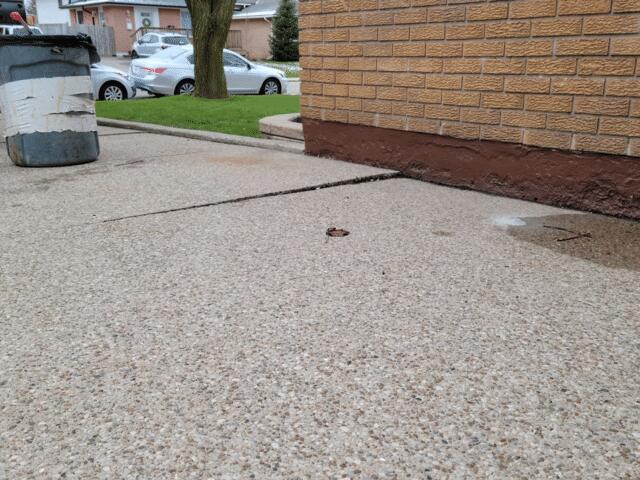
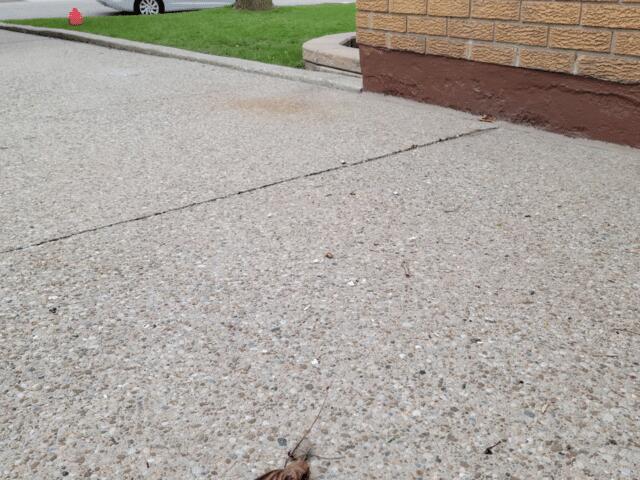
In Hamilton, a homeowner was facing an increasingly serious safety issue as multiple areas around the property began to shift and settle. Over time, sections of the driveway and front porch had dropped and separated, creating uneven transitions and unexpected height changes that made everyday movement around the home risky. Several falls had already occurred due to the shifting concrete, which became especially concerning for the elderly resident living in the home.
The driveway, made up of large concrete sections, had gradually moved as the underlying soil shifted and settled. These movements created wide, uneven joints between slabs that became clear trip hazards. As settlement continued toward the front porch, the concrete at the entrance also began to sink, exposing parts of the home’s foundation. This not only created a more prominent step into the house but also raised concerns about water intrusion and long-term foundation exposure, especially during heavy rainfall or freeze-thaw cycles.
Rather than opting for a costly and disruptive full replacement, the homeowners began searching for a repair method that could stabilize and lift the existing concrete. They contacted Canadian Concrete Leveling for an on-site evaluation and solution. After a detailed inspection, a targeted lifting plan was developed to address the most severely affected sections of the driveway and porch.
Using the PolyLevel® polyurethane injection system, small access holes were drilled at key settlement points across the slabs. High-density structural foam was then injected beneath the concrete, where it expanded to fill hidden voids and stabilize the weakened soil base. As the material cured, it gently raised the sunken slabs back toward their original position, realigning the joints and restoring safe, even transitions across the driveway and entryway.
Once the work was complete, the driveway and porch were leveled, the trip hazards were eliminated, and the foundation exposure was reduced. The homeowners were surprised by how efficient and minimally invasive the process was, especially compared to the idea of full replacement. Most importantly, they now have a safer, more stable entrance to their home and peace of mind knowing the settlement has been properly addressed.
our service area
We serve the following areas
- Annan
- Appin
- Belgrave
- Belmont
- Blue Mountains
- Bluevale
- Brampton
- Brownsville
- Brussels
- Chepstow
- Delaware
- Dorchester
- Duart
- Dutton
- Etobicoke
- Fergus
- Fingal
- Glencoe
- Guelph
- Holland Landing
- Holyrood
- Iona Station
- Kincardine
- Komoka
- Lucknow
- Maple
- Melbourne
- Mount Brydges
- Muirkirk
- Muncey
- Newbury
- Port Elgin
- Richmond Hill
- Ripley
- Rodney
- Shedden
- Southampton
- Southwold
- Sparta
- Springfield
- Talbotville Royal
- Teeswater
- Tiverton
- Tobermory
- Toronto
- Union
- Wallacetown
- Wardsville
- West Lorne
- Wingham
