Stamped Concrete Settlement Correction and Surface Rehabilitation
Challenge
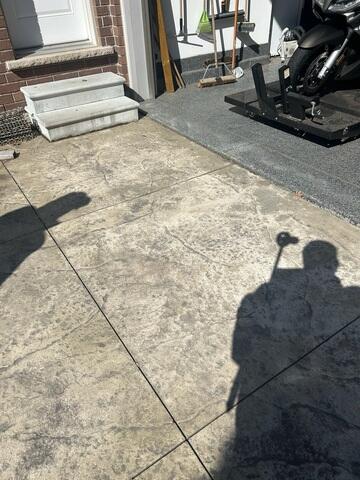
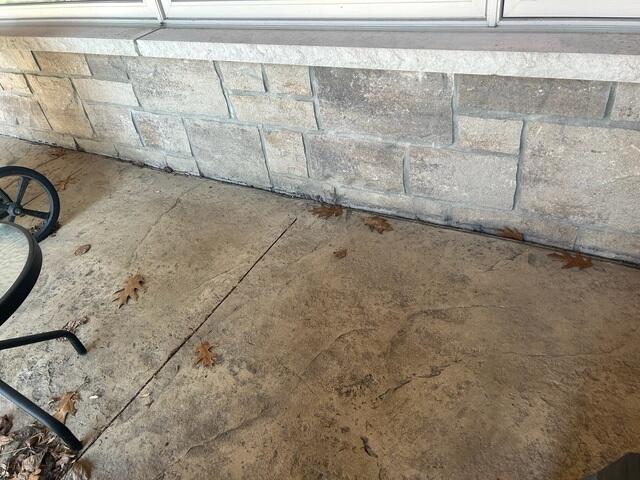
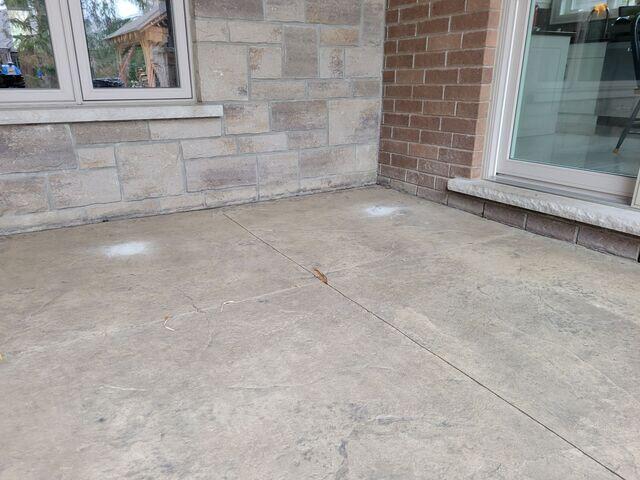
The homeowner’s stamped concrete surfaces were experiencing a combination of structural settlement and advanced surface deterioration. Over time, sections of the concrete had shifted and settled, causing the slabs to separate from the stone foundation. This movement created uneven walking surfaces and trip hazards, while also allowing water to collect and drain toward the home’s foundation—increasing the risk of long-term moisture-related issues.
In addition to the structural concerns, the appearance of the stamped concrete had significantly declined. The surface had become dull and weathered, with widespread white “ghosting” caused by trapped moisture, mineral deposits, and failing sealer layers. Hairline surface cracking and uneven wear further obscured the original stamped pattern, diminishing both curb appeal and the homeowner’s investment in decorative concrete.
Solution
The first phase of the project focused on correcting the underlying settlement issues. Using precision lifting techniques, we carefully raised and re-leveled the affected slabs to restore proper elevation and slope. This process allowed us to close the gaps between the concrete and the stone foundation, eliminate trip hazards, and improve surface drainage away from the home.
Once the slabs were structurally stabilized, attention turned to restoring the concrete’s surface. A comprehensive deep-cleaning process was performed to remove accumulated dirt, mineral buildup, and layers of old, failing sealers that were preventing the concrete from breathing properly. This step was critical in eliminating the ghosting effect and preparing the surface for long-term protection.
After cleaning, the expansion joints were refilled with a high-performance, industrial-grade sealant. This helped prevent future water infiltration, reduce freeze-thaw stress, and accommodate natural movement of the concrete without compromising the surrounding slabs.
To complete the restoration, a premium protective sealer was applied across the entire surface. This sealer enhanced the colour variation and depth of the stamped stone texture, bringing the original design back to life while also providing a durable, weather-resistant barrier. The finished surface not only regained its visual appeal but was also better protected against moisture, UV exposure, and ongoing wear.